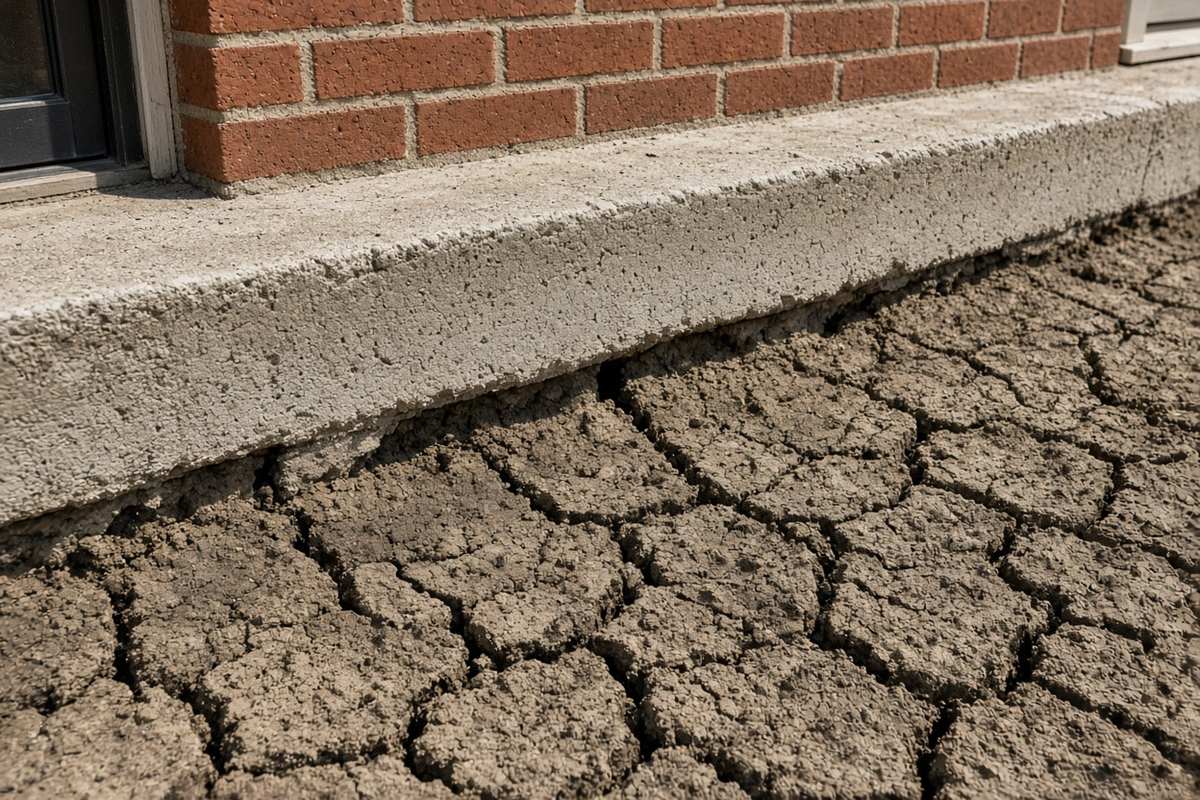
Clay Under Fort Worth Slab Foundations
Fort Worth lies in North Texas, and large parts of the area are underlain by clay that swells when wet and shrinks when dry. Rain soaks in, the clay expands, and the ground rises slightly. In a drought the same clay loses water, contracts, and can pull away from a foundation. A slab-on-grade house sits on a concrete pad poured at ground level, so the living floor feels that movement directly.
Movement from the weather often shows up as a hairline brick crack, a door that rubs in humid weather, or a gap at a baseboard after a dry month. Those clues do not automatically signal a broken pipe. Shrink and swell alone can explain them. A leak changes the picture because water collects in one zone under the slab. That zone can heave more than the soil beside it. A practical checklist of foundation leak signs and next steps is published by Family Handyman, including unexplained water use and damp spots that do not follow the weather.
Supply Lines and Cast Iron Drains
Older Fort Worth houses often have plumbing buried beneath the slab. Builders of the mid-twentieth century often ran copper water lines and cast iron drains in or under the concrete, then poured the floor over them. Either material can still corrode, pinhole, or separate at a joint where nobody can watch it happen.
Hot and cold supplies fail in different ways that residents can sometimes feel. A leak on the hot line may warm a patch of tile or bare concrete. A cold leak stays hidden longer and usually shows up as unexplained water use or dampness at the slab edge. Drain leaks are slower still. Wastewater can seep from a cracked cast iron joint and travel through the fill before any odor reaches a room. The pipe stays invisible. The symptoms do not.
Signs that deserve a prompt check
- Warm floor spots. Heat in a small area can indicate a hot supply leaking under the concrete.
- A meter that keeps turning. If all fixtures and appliances are off and the meter still moves, water is escaping.
- Cracked tile. Shifting concrete or moisture under the finish can pop grout and fracture tile.
- Damp baseboards. Wet trim along the floor often means moisture is reaching the slab perimeter.
- New structural cracks. Fresh stair-step brick cracks or doors that stop latching can reflect uneven soil moisture, including moisture from a leak.
One sign is rarely conclusive. The meter test is the exception homeowners can run without tools: shut off every use of water, including ice makers, and watch the dial. If it advances, the loss is real. Yard irrigation and a running toilet should be ruled out before anyone assumes the line under the slab is at fault.
How Leaks Are Located
Locating the break is worth the time it saves in broken concrete. With the house isolated from the meter, a pressure test on the hot side and another on the cold side shows which system is losing water. Acoustic gear listens for the hiss of a supply leak. When the hot line is charged, a thermal camera may trace a warm path across the floor. Drain lines are inspected with a camera that looks for cracks, open joints, and heavy scale inside cast iron.
Timing matters in this climate. A leak during a rainy stretch feeds clay that may already be expanded. A leak during drought wets soil that has contracted beside the beam. Either pattern soaks one area more than another. Residents who want a local reference for drying and cleanup once the plumbing is repaired can review https://waterdamagerestorationfortworthtx.org/ while the repair is being scheduled.
Repairs That Match the Pipe
A single hole in otherwise solid copper is often fixed through a small cut in the slab. The bad piece comes out, a new piece goes in, and the concrete is patched. Repeated leaks, or copper that has thinned over a long run, push owners toward a reroute. New supply lines are placed overhead or in walls, and the buried line is disconnected so it can no longer feed the soil.
Drain repairs follow the camera. A limited break in cast iron can be replaced with modern pipe in a short trench. Some drains can be sealed with a cured liner, which avoids a long opening when the host pipe is still round and stable. Liners are a poor match for a collapsed pipe or a joint that has slipped badly out of line. Those failures usually have to be excavated.
Plumbing repair and foundation repair solve different problems. Closing the leak stops new water from reaching the clay. It does not automatically bring a heaved or settled slab back to level. Owners who still see large cracks or sticking doors after the line is dry may need a foundation evaluation later.
Drying and a Careful Look for Mold
Soil, gravel, and nearby finishes can stay damp after the water stops. Pull up standing water, then dry carpet, pad, and wet baseboards, or remove them if they will not dry cleanly. Air movers and a dehumidifier shorten the wait. A moisture meter is more trustworthy than a hand on the surface, since the top can feel dry while the core is wet.
According to the U.S. Environmental Protection Agency, mold can begin to grow on damp materials within 24 to 48 hours. A spill wiped up immediately is a different case from pad or drywall that sat wet for days. Paper-faced gypsum, carpet cushion, and unfinished wood are the usual hosts. Musty odor or fresh discoloration after the job is a reason to look, not to ignore the corner and hope.
After the Repair
Gutters that discharge away from the house, soil that slopes outward, and moderate perimeter watering in a drought all help the clay stay more even once the leak is gone. Standing water against the slab can swell that soil again.