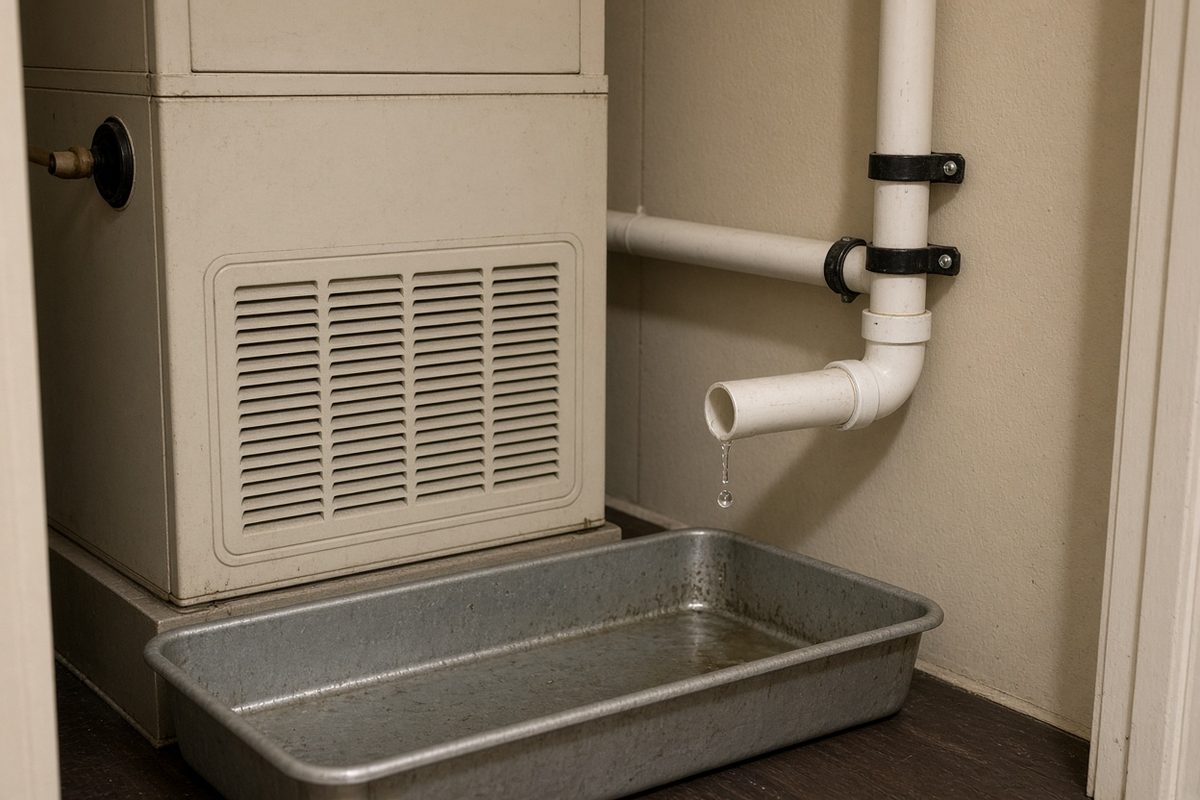
Why Condensate Drains Struggle in a Long San Antonio Summer
San Antonio's cooling season stretches from spring well into fall. Homes across the city run air conditioning for long hours once daytime heat reaches the upper 90s and, often, 100 degrees Fahrenheit or more. All of that runtime pulls moisture out of indoor air. The water itself is expected. Problems begin when the condensate cannot leave the house.
Inside a central system, warm air crosses a cold evaporator coil. Moisture condenses, falls into a drain pan, and exits through a condensate line, usually PVC. In many San Antonio houses the air handler sits in the attic, and the line relies on gravity to reach an outdoor discharge. When algae, slime, or scale narrows that pipe, water rises in the pan instead of leaving. Guides such as Bob Vila's overview of an air conditioner leaking water walk through clogged drain lines, full pans, and other ordinary causes of an indoor drip.
Algae, Biofilm, and Edwards Aquifer Scale
Two ordinary conditions in this climate clog drains. Heat and humidity let algae and bacterial biofilm grow inside a pipe that stays dark and wet for months. The film starts thin. By midsummer it can close a fitting that looked clear in April.
San Antonio's main water supply is the Edwards Aquifer, a limestone formation. Water from that limestone aquifer is hard because it carries dissolved minerals. Minerals can collect as scale on the coil, in the pan, and along the drain. A musty odor at a return, a gurgle near the air handler, or afternoon drips are early clues.
Primary Lines, Secondary Pans, and Float Switches
The primary drain should carry normal condensate to an outdoor discharge or another approved point. A secondary pan under the attic unit catches water if that line fails. A secondary drain may end in a visible spot, such as above a window, so an outdoor drip warns residents that the main line is blocked. A float switch can shut the system off when water rises too high.
Backups fail quietly. A switch buried in sludge or bypassed will not stop the unit. A secondary line packed with algae will not move overflow. The pan then spills into insulation and drywall. Downstairs, a tan stain or a soft sag may be the first clue, while insulation above is already wet.
A Homeowner Maintenance Checklist
Seasonal care prevents most of these leaks. A licensed technician should handle wiring, refrigerant, and the inside of the cabinet. Between visits, owners can check the discharge and other visible parts.
- Watch the primary outlet. During cooling, the outdoor PVC should drip. A dry end on a hot afternoon, with the system running, needs a closer look.
- Flush only as instructed. Many technicians rinse lines with white vinegar or a diluted bleach solution. Follow the label. Never mix vinegar and bleach.
- Keep the discharge clear. Soil, mulch, and nests can plug the opening. The pipe should slope down so water does not stand in a low spot.
- Confirm the float switch. Ask the technician to show that rising water shuts the unit off and that the switch resets.
- Inspect the secondary pan. Standing water or slime means the primary drain has already failed. The pan is a warning, not a tank.
- Change a loaded filter. A choked filter can ice the coil, and the meltwater can overwhelm a slow drain.
Warning Signs Before the Ceiling Stains
Several changes point back to the attic unit:
- The system stops on its own and restarts later, a common sign that the float switch is tripping.
- A fresh stain appears under the air handler or along the drain path.
- Paint bubbles, drywall feels soft, or texture starts to droop.
- A musty smell strengthens when cooling cycles on.
- The secondary drain drips outside after a history of staying dry.
Turn the cooling off at the thermostat before anyone climbs into a hot attic. Water and a live air handler are a risky mix. If the ceiling is dripping, a bucket protects what sits below until help arrives. The air handler breaker should be opened only by someone who can do that safely.
What to Do After a Stain Shows
A stain records water that already passed through building materials. Drying the painted face does not dry insulation above it. Homeowners should handle the leak and the wet materials as two jobs.
Stop further water first. Keep the system off until a technician clears the drain, cleans the pan, tests the float switch, and confirms the coil is draining. Restarting too soon usually repeats the spill.
Next, find the spread of the moisture. Wet insulation holds moisture against wood and drywall. In San Antonio heat, open surfaces can dry while a closed cavity stays damp. When the stain is larger than a small spot, when the ceiling sags, or when water reached more than one room, residents should schedule flood damage cleanup to remove soaked materials and dry the cavity. An HVAC company repairs the machine. Cleanup of ceilings, insulation, and flooring is separate work, and waiting allows a small stain to become a wider repair.
Photos of the stain, the pan, and the outlet help both trades. Save notes that mention a clogged line. If that pan overflows again the same season, ask about slope, a cleanout tee, or a new switch rather than another quick flush.
A Simple Seasonal Habit
Before the first extended heat, confirm that water leaves outdoors, the secondary pan is empty, and the float switch stops the unit. Midsummer, glance at the discharge on a hard running day. Hard water from the Edwards Aquifer region and algae in a warm drain will return. Owners who notice a slow line early keep condensate in the pipe and the ceiling below dry.