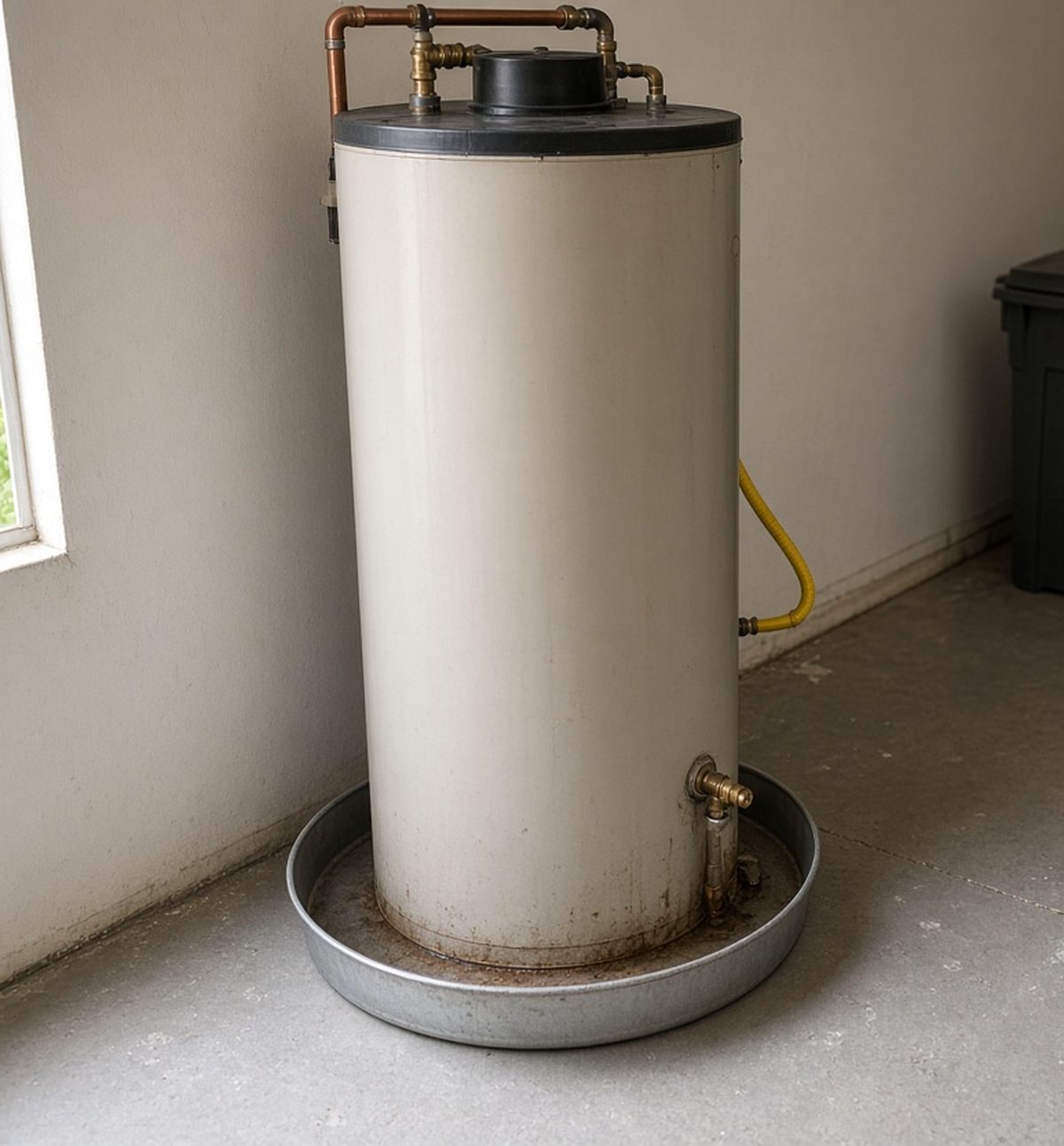
A tank water heater can work for years in a closet, garage, or basement without much attention. It stores hot water for showers, dishes, and laundry. Sediment, corrosion, and worn safety parts show up as small clues first. Homeowners who recognize those clues can maintain the unit before a leak reaches the floor.
How a storage tank ages
Most homes in the United States still rely on a storage tank. Cold water enters, a gas burner or electric elements heat it, and hot water leaves from the top. Minerals settle as sediment on the bottom, especially with hard water. That layer can insulate the heat source, so the unit runs longer to deliver the same hot water, and it can cause noise. A glass lining and a sacrificial anode rod slow rust. The anode corrodes on purpose so the steel lasts longer. Once the anode is gone and the lining fails, rust reaches the water residents use.
Rust colored water
Discolored hot water is a sign owners can check in a few minutes. Hot water run into a white sink shows the tint clearly. A rusty or brown tint on the hot side, with clear cold water, often points to the heater rather than the municipal main. Particles can come from a spent anode or from the tank wall. Sediment can also leave water cloudy or gritty after a faucet sits unused. Color that appears once, in both hot and cold, after work on the street main is a different event. Color that stays in the hot water deserves attention to the tank and the anode.
Popping noises and slow recovery
Popping or rumbling from the cabinet is a classic sediment clue. Water trapped under mineral scale turns to steam, and the bubbles collapse with a pop. The sound is usually loudest while the burner or elements are on. Heavy scale also lengthens recovery, so the home runs out of hot water sooner even though the thermostat has not changed. Owners who hear the tank and notice shorter showers should flush the unit before the layer packs harder.
Water at the base
Pooling around the heater is urgent. A damp ring, a rust streak on the jacket, or water sitting in a drain pan means moisture is leaving the system. Causes include a loose fitting, a dripping relief valve, condensation on a cold tank in humid air, or a hole in the tank. Condensation often shows up during a long heating cycle and then dries. A steady puddle, especially if the water is rusty, points to a leak. A breach in the storage tank is a replacement issue. Sealants and patches do not make a cracked shell trustworthy. If the leak has already soaked flooring, cabinets, or nearby walls, structural drying help can check hidden moisture once the water supply is shut off.
Relief valve, pan, and drain line
The temperature and pressure relief valve, often called the T&P valve, sits on the top or side of the tank. It opens if temperature or pressure exceeds its rating, then it should close. Frequent dripping or a full discharge means high pressure, a thermostat set too hot, an overheating tank, or a failed valve. Owners should never cap the outlet, plug it, or remove the valve to silence a drip. The discharge pipe should slope down to a safe end near the floor or an indirect drain, with no shutoff in that pipe and an opening that stays clear.
A drain pan belongs under the tank wherever a leak could wet finished floors or living space. Many codes require a pan in attics and on upper floors. The pan works only with a drain line that leads to a proper discharge point. A full pan, a kinked line, or a line aimed into a bucket is a warning by itself. Residents who find standing water should trace the source the same day so a fitting leak does not become soaked drywall.
Annual flushing
Manufacturers commonly recommend flushing a storage heater about once a year to move sediment out. The routine is straightforward. Power or fuel is shut off, the cold inlet is closed, a hose runs from the drain valve to a floor drain, and water is drained until it looks clearer. Some owners lift the T&P test lever briefly to confirm it moves, then release it so the valve snaps shut. Published This Old House guidance on water heater maintenance covers flushing, anode checks, and other routine steps that keep a tank from failing early. A flush will not fix a tank that already leaks. A seized drain valve on an older unit is a sensible time to call a qualified plumber.
When replacement beats repair
Plenty of faults are worth repairing. A dripping union, a depleted anode, a bad thermostat, or a failed electric element can be replaced on a tank that still holds pressure and stays dry. Replacement is the better path when the shell leaks, when rusty hot water returns soon after service, when popping and weak recovery continue after a real flush, or when several parts fail together on an older heater. A leaking tank does not become reliable with a patch. Households that are already planning a change can weigh the same storage size against a tankless unit.
Tankless basics
A tankless heater, also called a demand heater, warms water as it flows instead of storing a tank full of hot water. Sized correctly for the home and the incoming groundwater temperature, it can supply hot water for a long stretch without a recovery wait. It does not eliminate maintenance. Scale still forms on the heat exchanger, especially in hard water areas, and many manufacturers call for periodic descaling. Gas units need proper venting and a gas supply that matches the burner. Electric units draw substantial power when several fixtures run at once. Cold water sandwich, a brief cool burst between draws, can happen on some models. Warning signs still matter: error codes, fluctuating temperature, unusual noise, and any leak at fittings or the heat exchanger. Those clues belong on a service list, just as sediment and rust do on a storage tank.