Why Condensate Drains Struggle in a Long San Antonio Summer
San Antonio's cooling season stretches from spring well into fall. Homes across the city run air conditioning for long hours once daytime heat reaches the upper 90s and, often, 100 degrees Fahrenheit or more. All of that runtime pulls moisture out of indoor air. The water itself is expected. Problems begin when the condensate cannot leave the house.
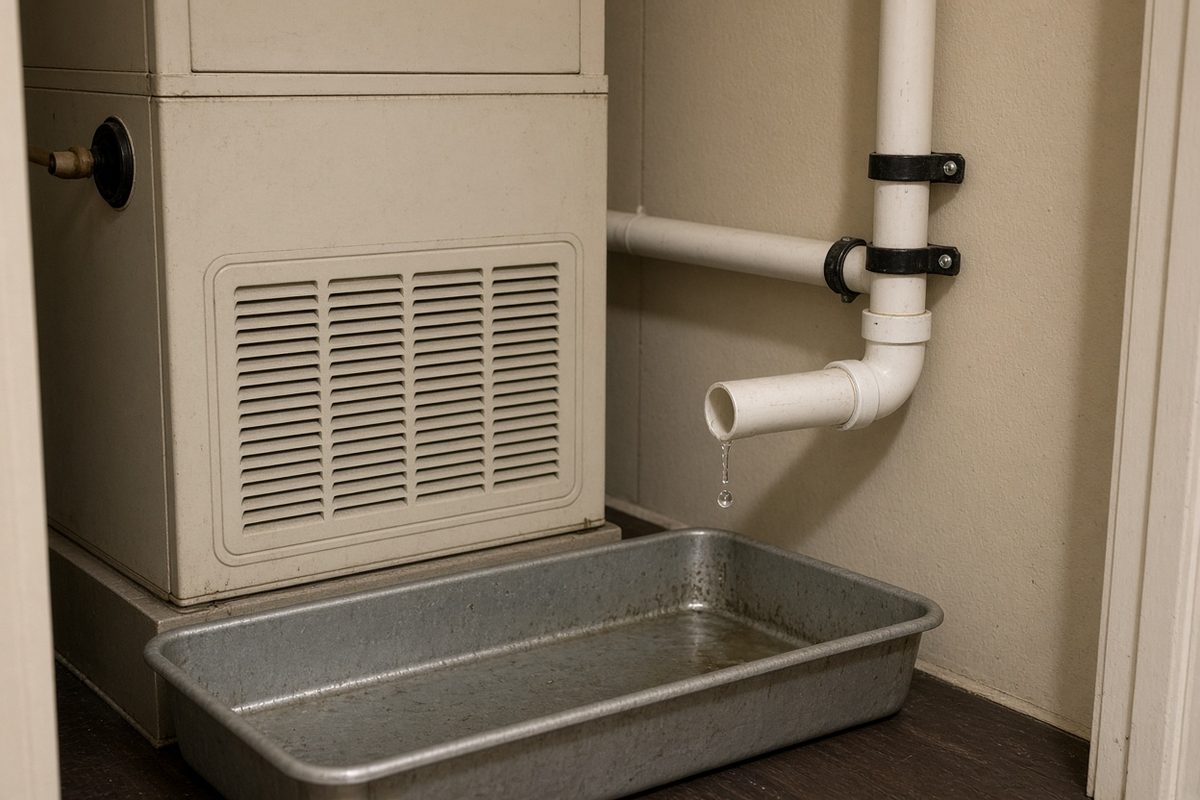
Inside a central system, warm air crosses a cold evaporator coil. Moisture condenses, falls into a drain pan, and exits through a condensate line, usually PVC. In many San Antonio houses the air handler sits in the attic, and the line relies on gravity to reach an outdoor discharge. When algae, slime, or scale narrows that pipe, water rises in the pan instead of leaving. Guides such as Bob Vila's overview of an air conditioner leaking water walk through clogged drain lines, full pans, and other ordinary causes of an indoor drip.
Algae, Biofilm, and Edwards Aquifer Scale
Two ordinary conditions in this climate clog drains. Heat and humidity let algae and bacterial biofilm grow inside a pipe that stays dark and wet for months. The film starts thin. By midsummer it can close a fitting that looked clear in April.
San Antonio's main water supply is the Edwards Aquifer, a limestone formation. Water from that limestone aquifer is hard because it carries dissolved minerals. Minerals can collect as scale on the coil, in the pan, and along the drain. A musty odor at a return, a gurgle near the air handler, or afternoon drips are early clues.
Primary Lines, Secondary Pans, and Float Switches
The primary drain should carry normal condensate to an outdoor discharge or another approved point. A secondary pan under the attic unit catches water if that line fails. A secondary drain may end in a visible spot, such as above a window, so an outdoor drip warns residents that the main line is blocked. A float switch can shut the system off when water rises too high.
Backups fail quietly. A switch buried in sludge or bypassed will not stop the unit. A secondary line packed with algae will not move overflow. The pan then spills into insulation and drywall. Downstairs, a tan stain or a soft sag may be the first clue, while insulation above is already wet.
A Homeowner Maintenance Checklist
Seasonal care prevents most of these leaks. A licensed technician should handle wiring, refrigerant, and the inside of the cabinet. Between visits, owners can check the discharge and other visible parts.
Watch the primary outlet. During cooling, the outdoor PVC should drip. A dry end on a hot afternoon, with the system running, needs a closer look.
Flush only as instructed. Many technicians rinse lines with white vinegar or a diluted bleach solution. Follow the label. Never mix vinegar and bleach.
Keep the discharge clear. Soil, mulch, and nests can plug the opening. The pipe should slope down so water does not stand in a low spot.
Confirm the float switch. Ask the technician to show that rising water shuts the unit off and that the switch resets.
Inspect the secondary pan. Standing water or slime means the primary drain has already failed. The pan is a warning, not a tank.
Change a loaded filter. A choked filter can ice the coil, and the meltwater can overwhelm a slow drain.
Warning Signs Before the Ceiling Stains
Several changes point back to the attic unit:
The system stops on its own and restarts later, a common sign that the float switch is tripping.
A fresh stain appears under the air handler or along the drain path.
Paint bubbles, drywall feels soft, or texture starts to droop.
A musty smell strengthens when cooling cycles on.
The secondary drain drips outside after a history of staying dry.
Turn the cooling off at the thermostat before anyone climbs into a hot attic. Water and a live air handler are a risky mix. If the ceiling is dripping, a bucket protects what sits below until help arrives. The air handler breaker should be opened only by someone who can do that safely.
What to Do After a Stain Shows
A stain records water that already passed through building materials. Drying the painted face does not dry insulation above it. Homeowners should handle the leak and the wet materials as two jobs.
Stop further water first. Keep the system off until a technician clears the drain, cleans the pan, tests the float switch, and confirms the coil is draining. Restarting too soon usually repeats the spill.
Next, find the spread of the moisture. Wet insulation holds moisture against wood and drywall. In San Antonio heat, open surfaces can dry while a closed cavity stays damp. When the stain is larger than a small spot, when the ceiling sags, or when water reached more than one room, residents should schedule flood damage cleanup to remove soaked materials and dry the cavity. An HVAC company repairs the machine. Cleanup of ceilings, insulation, and flooring is separate work, and waiting allows a small stain to become a wider repair.
Photos of the stain, the pan, and the outlet help both trades. Save notes that mention a clogged line. If that pan overflows again the same season, ask about slope, a cleanout tee, or a new switch rather than another quick flush.
A Simple Seasonal Habit
Before the first extended heat, confirm that water leaves outdoors, the secondary pan is empty, and the float switch stops the unit. Midsummer, glance at the discharge on a hard running day. Hard water from the Edwards Aquifer region and algae in a warm drain will return. Owners who notice a slow line early keep condensate in the pipe and the ceiling below dry.
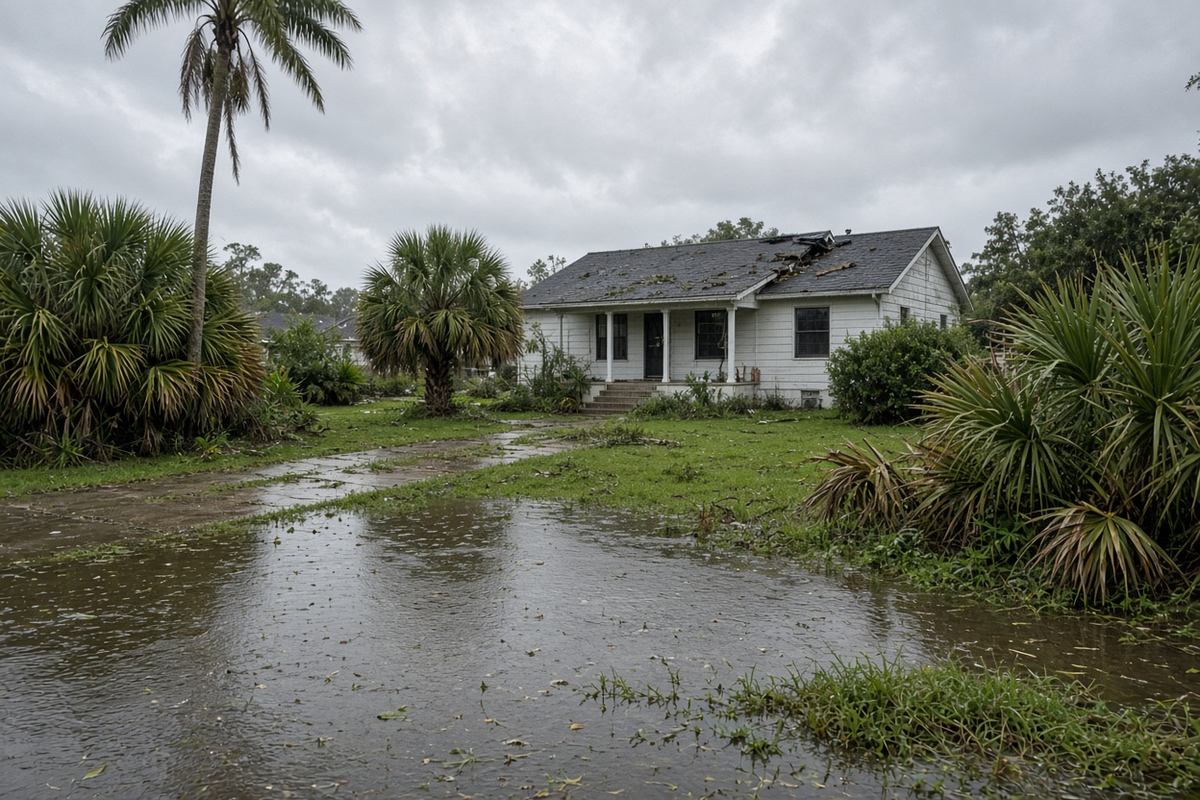
Tampa homeowners spent the fall of 2024 learning how different bay water and wind driven rain really are. Hurricane Helene, in late September, sent a historic storm surge into Tampa Bay even though its center came ashore far to the north, on Florida's Big Bend coast. Low streets on Davis Islands, along Bayshore Boulevard, and through other low lying parts of South Tampa took on salt water. About two weeks later, Hurricane Milton crossed the peninsula after reaching Category 5 strength over the Gulf and weakening before landfall south of Tampa Bay. For Hillsborough County, Milton was a long night of wind, torrential rain, and water forced through windows, sliders, and roof edges.
Residents who lived through both storms now talk about them as a pair. One soaked the ground floor from the outside in. The other tested every joint in the building envelope. The lessons apply the next time a tropical system aims at the bay.
Why the Lowest Blocks Flooded First
Davis Islands, Bayshore, and much of South Tampa sit close to sea level, with streets that drain toward the bay and the Hillsborough River. When Helene's surge rose, the water did not need a direct hit on the city. It came up through storm drains, across seawalls, and over low yards. Cars, first floors, and garages that had stayed dry in lesser storms took on salt water. Owners who had watched the forecast still found it higher and faster than a typical king tide. NOAA's Ocean Service explains what storm surge is and how it differs from a storm tide, which is useful when comparing a bay surge with ordinary high water.
Salt water is a different problem from a heavy afternoon thunderstorm. It carries salt, silt, and whatever the surge picked up in the streets. It corrodes metal, attacks wiring and appliances, and leaves a crust that keeps materials damp. Drywall, insulation, carpet, and cabinetry that sat in surge water are rarely worth saving once they have been soaked through. Hardwood swells and cups. Door frames swell and stick. The smell of bay water lingers in wall cavities long after the street looks normal again.
What Milton Showed About Wind and Rain
Milton arrived while many homes were still wet from Helene. Evacuation orders covered much of the Tampa Bay region, and residents who left came back to a different kind of damage. Wind pushed rain under shingles, through soffits, and past sliding glass doors that had held in ordinary storms. Windows leaked at the corners. Water ran down interior walls and pooled on upper floors the surge never reached.
That rain is fresh water, but it is not harmless. It soaks insulation, stains ceilings, and wets the paper face of drywall. In a closed, humid house with the power out, it sits. Hillsborough County's air in October is already thick. Without air conditioning, indoor humidity stays high, and wet materials dry slowly. Homeowners who assumed a roof leak would air out over a weekend often found soft drywall and a musty odor once the power returned.
Where wind driven rain tends to enter
Sliding glass doors and the tracks beneath them
Window corners, failed caulk, and older frames
Roof penetrations, ridge lines, and lifted shingles
Garage door seals and thresholds at grade
Soffits and gable vents that face the wind
Preparation That Held Up
Owners who fared better had done plain work before either storm. They cleared gutters and downspouts so rain had a path off the roof. They moved vehicles and important papers out of ground level garages. They filled prescriptions, charged phones, and stored drinking water. They left when local officials said to leave. Sandbags helped on some shallow paths of water at doorways and garage thresholds. They did not hold back a bay surge on an open street, and residents who treated them as a seawall learned that limit quickly.
Photos taken on a calm day proved as useful as plywood. Room by room images of floors, appliances, and the outside of the house gave a baseline. After Helene and Milton, that record made it easier to show an insurer what had changed.
Safety in the First Hours Back
The return home is when many injuries and bad decisions happen. Homeowners were safer when they waited for authorities to reopen streets and when they treated standing water as contaminated. Surge water can hide open drains, sharp debris, and downed lines. If the power was still out, residents avoided flipping breakers in a wet room. They kept generators outdoors, far from doors and windows, so exhaust could not drift inside.
A simple walk through helped before any cleanup began. Owners looked for sagging ceilings, buckled floors, and the smell of gas. They photographed each room before moving furniture. They wrote down the date, the water line, and which rooms were wet. They kept damaged materials until an adjuster had seen them, unless the mess was a health hazard that had to go for safety.
A practical documentation list
Wide shots and close ups of every wet room, before cleanup
The water line on walls, cabinets, and the exterior
Serial numbers on ruined appliances, if they can be read safely
A written timeline of when water entered and when drying started
Receipts for pumps, fans, materials, and any temporary housing
Drying Fast When the Air Is Already Wet
In Tampa, open windows are not a drying plan. Outdoor air is often as humid as the air inside, and it can carry more moisture into a house. The reliable approach is to remove standing water, discard materials that stayed wet, and then run air conditioning or a dehumidifier with air movers once power is safe. Carpet pads and fiberglass insulation that were submerged, or packed with rain, rarely dry in place. Porous items that held surge water, including upholstered furniture and mattresses, usually need to be thrown out, because salt and contaminants remain after the surface feels dry.
Mold sets the deadline. On damp drywall and wood, it can start growing within 24 to 48 hours, especially in a warm, closed house. That window is why residents who could do so safely pulled baseboards, opened wet walls, and got air moving the day they returned. Where the loss was large, or where salt water sat inside walls, many owners called a Tampa water cleanup team to extract water, set drying equipment, and check moisture in materials that looked fine on the surface. A wall can feel dry to the hand and still be wet inside.
A small leak of clean rain can sometimes be dried with household equipment if the area is limited and the power is on. Surge water is a different category. It calls for protective gear, careful disposal, and a plan for the salt left in framing. Wiping a floor and running one box fan does not finish that job.
What Owners Changed Afterward
The lasting lessons were modest and specific. Residents raised what they stored in garages and ground floor closets. They replaced swollen door sweeps and recaulked windows before the next wet season. They had roofers look at lifted shingles rather than waiting for a ceiling stain to spread. They reviewed flood coverage well before hurricane season, because a standard homeowners policy and a flood policy answer different questions, and the time to sort that out is before a storm is in the Gulf. They kept copies of important papers above the first floor and a battery radio for evacuation news.
Helene and Milton did not strike Tampa the same way, and that was the point residents kept. A house can flood from the bay without a direct landfall, and it can take on rain from the top and the sides when the track stays south of the bay. Low lying streets in South Tampa, on Davis Islands, and along Bayshore will face that pairing again. Homeowners who treat surge water as contaminated, who document the loss before they demolish, and who dry the structure while Florida humidity is working against them give the house a better chance to be livable when the next system forms.
Fort Worth lies in North Texas, and large parts of the area are underlain by clay that swells when wet and shrinks when dry. Rain soaks in, the clay expands, and the ground rises slightly. In a drought the same clay loses water, contracts, and can pull away from a foundation. A slab-on-grade house sits on a concrete pad poured at ground level, so the living floor feels that movement directly.
Movement from the weather often shows up as a hairline brick crack, a door that rubs in humid weather, or a gap at a baseboard after a dry month. Those clues do not automatically signal a broken pipe. Shrink and swell alone can explain them. A leak changes the picture because water collects in one zone under the slab. That zone can heave more than the soil beside it. A practical checklist of foundation leak signs and next steps is published by Family Handyman, including unexplained water use and damp spots that do not follow the weather.
Supply Lines and Cast Iron Drains
Older Fort Worth houses often have plumbing buried beneath the slab. Builders of the mid-twentieth century often ran copper water lines and cast iron drains in or under the concrete, then poured the floor over them. Either material can still corrode, pinhole, or separate at a joint where nobody can watch it happen.
Hot and cold supplies fail in different ways that residents can sometimes feel. A leak on the hot line may warm a patch of tile or bare concrete. A cold leak stays hidden longer and usually shows up as unexplained water use or dampness at the slab edge. Drain leaks are slower still. Wastewater can seep from a cracked cast iron joint and travel through the fill before any odor reaches a room. The pipe stays invisible. The symptoms do not.
Signs that deserve a prompt check
Warm floor spots. Heat in a small area can indicate a hot supply leaking under the concrete.
A meter that keeps turning. If all fixtures and appliances are off and the meter still moves, water is escaping.
Cracked tile. Shifting concrete or moisture under the finish can pop grout and fracture tile.
Damp baseboards. Wet trim along the floor often means moisture is reaching the slab perimeter.
New structural cracks. Fresh stair-step brick cracks or doors that stop latching can reflect uneven soil moisture, including moisture from a leak.
One sign is rarely conclusive. The meter test is the exception homeowners can run without tools: shut off every use of water, including ice makers, and watch the dial. If it advances, the loss is real. Yard irrigation and a running toilet should be ruled out before anyone assumes the line under the slab is at fault.
How Leaks Are Located
Locating the break is worth the time it saves in broken concrete. With the house isolated from the meter, a pressure test on the hot side and another on the cold side shows which system is losing water. Acoustic gear listens for the hiss of a supply leak. When the hot line is charged, a thermal camera may trace a warm path across the floor. Drain lines are inspected with a camera that looks for cracks, open joints, and heavy scale inside cast iron.
Timing matters in this climate. A leak during a rainy stretch feeds clay that may already be expanded. A leak during drought wets soil that has contracted beside the beam. Either pattern soaks one area more than another. Residents who want a local reference for drying and cleanup once the plumbing is repaired can review https://waterdamagerestorationfortworthtx.org/ while the repair is being scheduled.
Repairs That Match the Pipe
A single hole in otherwise solid copper is often fixed through a small cut in the slab. The bad piece comes out, a new piece goes in, and the concrete is patched. Repeated leaks, or copper that has thinned over a long run, push owners toward a reroute. New supply lines are placed overhead or in walls, and the buried line is disconnected so it can no longer feed the soil.
Drain repairs follow the camera. A limited break in cast iron can be replaced with modern pipe in a short trench. Some drains can be sealed with a cured liner, which avoids a long opening when the host pipe is still round and stable. Liners are a poor match for a collapsed pipe or a joint that has slipped badly out of line. Those failures usually have to be excavated.
Plumbing repair and foundation repair solve different problems. Closing the leak stops new water from reaching the clay. It does not automatically bring a heaved or settled slab back to level. Owners who still see large cracks or sticking doors after the line is dry may need a foundation evaluation later.
Drying and a Careful Look for Mold
Soil, gravel, and nearby finishes can stay damp after the water stops. Pull up standing water, then dry carpet, pad, and wet baseboards, or remove them if they will not dry cleanly. Air movers and a dehumidifier shorten the wait. A moisture meter is more trustworthy than a hand on the surface, since the top can feel dry while the core is wet.
According to the U.S. Environmental Protection Agency, mold can begin to grow on damp materials within 24 to 48 hours. A spill wiped up immediately is a different case from pad or drywall that sat wet for days. Paper-faced gypsum, carpet cushion, and unfinished wood are the usual hosts. Musty odor or fresh discoloration after the job is a reason to look, not to ignore the corner and hope.
After the Repair
Gutters that discharge away from the house, soil that slopes outward, and moderate perimeter watering in a drought all help the clay stay more even once the leak is gone. Standing water against the slab can swell that soil again.
A tank water heater can work for years in a closet, garage, or basement without much attention. It stores hot water for showers, dishes, and laundry. Sediment, corrosion, and worn safety parts show up as small clues first. Homeowners who recognize those clues can maintain the unit before a leak reaches the floor.
How a storage tank ages
Most homes in the United States still rely on a storage tank. Cold water enters, a gas burner or electric elements heat it, and hot water leaves from the top. Minerals settle as sediment on the bottom, especially with hard water. That layer can insulate the heat source, so the unit runs longer to deliver the same hot water, and it can cause noise. A glass lining and a sacrificial anode rod slow rust. The anode corrodes on purpose so the steel lasts longer. Once the anode is gone and the lining fails, rust reaches the water residents use.
Rust colored water
Discolored hot water is a sign owners can check in a few minutes. Hot water run into a white sink shows the tint clearly. A rusty or brown tint on the hot side, with clear cold water, often points to the heater rather than the municipal main. Particles can come from a spent anode or from the tank wall. Sediment can also leave water cloudy or gritty after a faucet sits unused. Color that appears once, in both hot and cold, after work on the street main is a different event. Color that stays in the hot water deserves attention to the tank and the anode.
Popping noises and slow recovery
Popping or rumbling from the cabinet is a classic sediment clue. Water trapped under mineral scale turns to steam, and the bubbles collapse with a pop. The sound is usually loudest while the burner or elements are on. Heavy scale also lengthens recovery, so the home runs out of hot water sooner even though the thermostat has not changed. Owners who hear the tank and notice shorter showers should flush the unit before the layer packs harder.
Water at the base
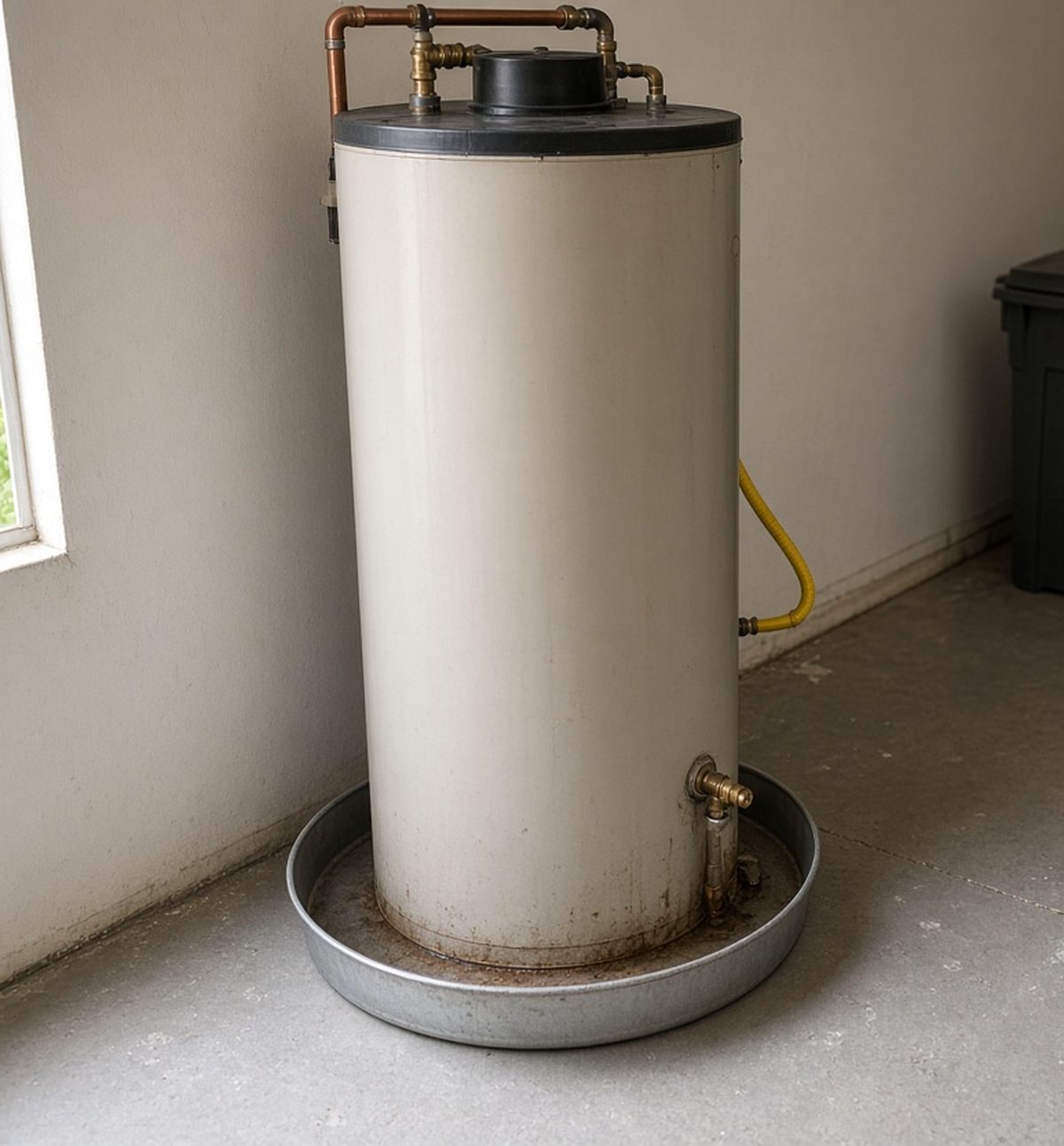
Pooling around the heater is urgent. A damp ring, a rust streak on the jacket, or water sitting in a drain pan means moisture is leaving the system. Causes include a loose fitting, a dripping relief valve, condensation on a cold tank in humid air, or a hole in the tank. Condensation often shows up during a long heating cycle and then dries. A steady puddle, especially if the water is rusty, points to a leak. A breach in the storage tank is a replacement issue. Sealants and patches do not make a cracked shell trustworthy. If the leak has already soaked flooring, cabinets, or nearby walls, structural drying help can check hidden moisture once the water supply is shut off.
Relief valve, pan, and drain line
The temperature and pressure relief valve, often called the T&P valve, sits on the top or side of the tank. It opens if temperature or pressure exceeds its rating, then it should close. Frequent dripping or a full discharge means high pressure, a thermostat set too hot, an overheating tank, or a failed valve. Owners should never cap the outlet, plug it, or remove the valve to silence a drip. The discharge pipe should slope down to a safe end near the floor or an indirect drain, with no shutoff in that pipe and an opening that stays clear.
A drain pan belongs under the tank wherever a leak could wet finished floors or living space. Many codes require a pan in attics and on upper floors. The pan works only with a drain line that leads to a proper discharge point. A full pan, a kinked line, or a line aimed into a bucket is a warning by itself. Residents who find standing water should trace the source the same day so a fitting leak does not become soaked drywall.
Annual flushing
Manufacturers commonly recommend flushing a storage heater about once a year to move sediment out. The routine is straightforward. Power or fuel is shut off, the cold inlet is closed, a hose runs from the drain valve to a floor drain, and water is drained until it looks clearer. Some owners lift the T&P test lever briefly to confirm it moves, then release it so the valve snaps shut. Published This Old House guidance on water heater maintenance covers flushing, anode checks, and other routine steps that keep a tank from failing early. A flush will not fix a tank that already leaks. A seized drain valve on an older unit is a sensible time to call a qualified plumber.
When replacement beats repair
Plenty of faults are worth repairing. A dripping union, a depleted anode, a bad thermostat, or a failed electric element can be replaced on a tank that still holds pressure and stays dry. Replacement is the better path when the shell leaks, when rusty hot water returns soon after service, when popping and weak recovery continue after a real flush, or when several parts fail together on an older heater. A leaking tank does not become reliable with a patch. Households that are already planning a change can weigh the same storage size against a tankless unit.
Tankless basics
A tankless heater, also called a demand heater, warms water as it flows instead of storing a tank full of hot water. Sized correctly for the home and the incoming groundwater temperature, it can supply hot water for a long stretch without a recovery wait. It does not eliminate maintenance. Scale still forms on the heat exchanger, especially in hard water areas, and many manufacturers call for periodic descaling. Gas units need proper venting and a gas supply that matches the burner. Electric units draw substantial power when several fixtures run at once. Cold water sandwich, a brief cool burst between draws, can happen on some models. Warning signs still matter: error codes, fluctuating temperature, unusual noise, and any leak at fittings or the heat exchanger. Those clues belong on a service list, just as sediment and rust do on a storage tank.